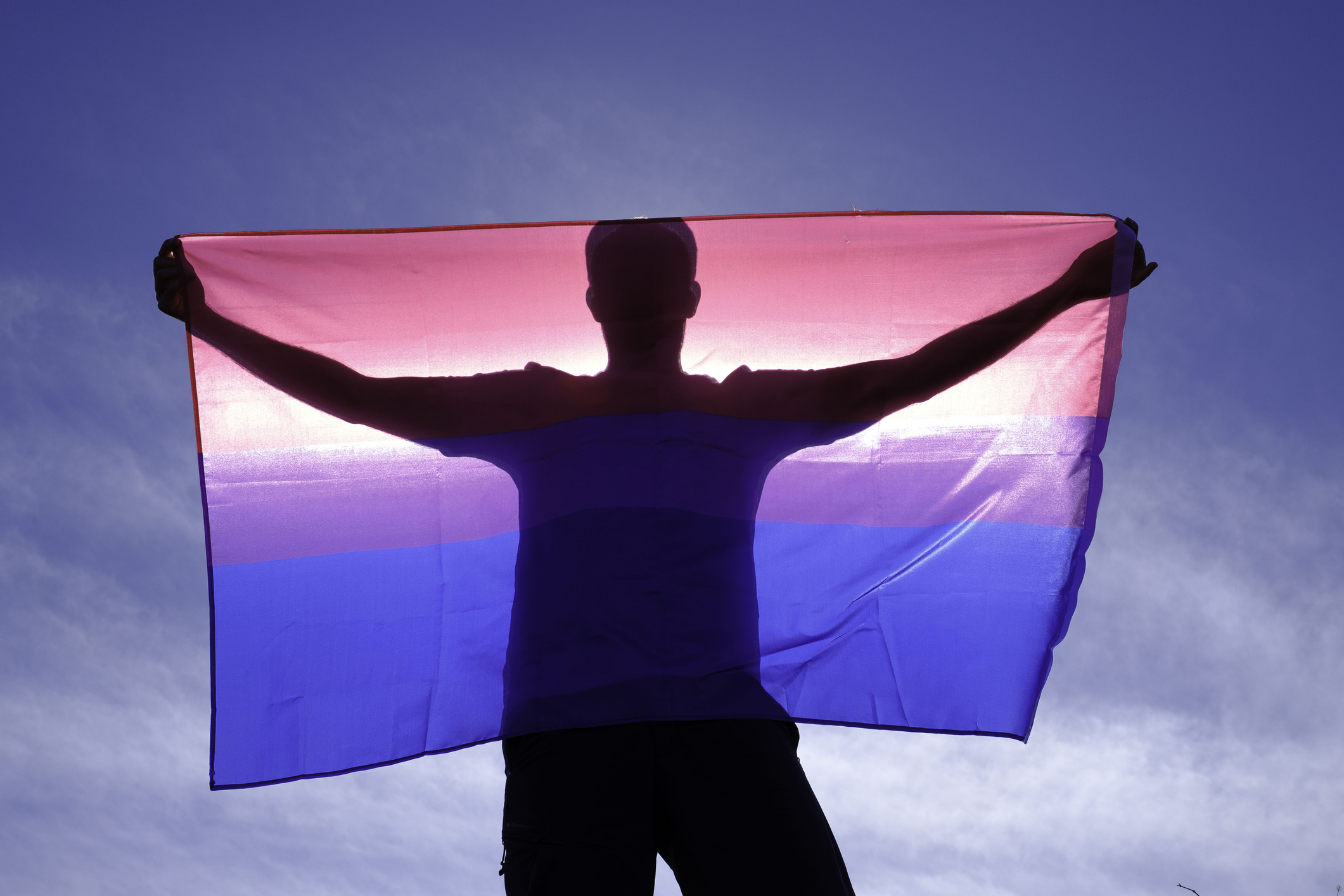
Bisexuality is often defined as attraction to more than one gender. But for many men, the lived experience is more complex than any single label can capture.
Rather than a fixed or singular identity, bisexuality is better understood as an umbrella term that reflects a range of ways people experience attraction.
For some men, this may mean being attracted to both men and women. For others, it may involve a primary attraction to one gender that is not exclusive. Some individuals experience their sexuality as fluid, shifting over time, while others describe their attraction as independent of gender where emotional connection, personality, or relational depth are more central.
There are also those men who challenge binary ideas of gender altogether, and therefore reject the notion that attraction must be directed toward “one,” “the other,” or “both.” And importantly, not all men who have sex with men identify as gay or bisexual. For some, the label bisexual fits and for others, it doesn’t or doesn’t feel necessary.
People may choose not to identify as bisexual due to:
- Social stigma or prejudice surrounding bisexuality
- Cultural or generational differences in understanding sexuality.
- Men who are married, partnered, or identifying as straight, who have sexual experiences with other men choose not to use the label or does not automatically define their identity
- A desire to feel accepted within heterosexual or gay and lesbian communities
Useful questions to consider might be “is your experience of attraction, connection, and desire”?
- What does this mean about me?
- Is this part of who I am, or something I do?
- Do I need to define it?
There is no single pathway. Identity, behaviour, and meaning do not always align neatly, and many men find themselves living in this “in-between” space.
Bisexuality has frequently been described as an invisible or overlooked identity and is often connected to issues of belonging, safety, and recognition.
What Is Biphobia?
Biphobia refers to negative attitudes, beliefs, and systemic biases directed toward people who are attracted to more than one gender. These attitudes can be subtle or explicit and may occur both within broader society and within LGBTQ+ communities.
Barker et al, (2010) report some of the common forms of biphobia to include:
- Bisexual denial: Questioning whether bisexuality is real or dismissing it as confusion
- Bisexual invisibility: Assuming people are either heterosexual or gay, often based on their current relationship
- Negative stereotypes: Beliefs that bisexual people are promiscuous, unreliable, or incapable of committed relationships
- Cultural and or religious messages about masculinity and sexuality can contribute to self-doubt, stigma, and a sense of not fully belonging in any community.
Bisexual but Feeling Invisible
Daniel, 32, identifies as bisexual and has had relationships with both men and women. Currently, he is in a relationship with a male partner.
In gay spaces, he often feels questioned:
“So you’re actually gay now?” “Were you just experimenting before?”
In broader social settings, his bisexuality is rarely acknowledged at all. Despite being clear in his identity, Daniel finds himself feeling unseen, caught between communities, yet not fully belonging in either.
What begins to emerge is not confusion about his sexuality, but a deeper question of recognition and legitimacy.
Relationships, Secrecy, and Meaning
For many men—particularly those in heterosexual relationships—same-sex attraction or behaviour can raise complex emotional and relational questions:
- How do I understand these experiences?
- Do I tell my partner?
- Can I integrate this into my life—or does it remain separate?
- What does integrity look like for me?
These are not just sexual questions. They are existential questions—about identity, responsibility, choice, and how one chooses to live.
Bisexuality reminds us that attraction and identity are not always fixed or easily defined.
Moving beyond binary thinking allows for a more honest and compassionate understanding of human experience.
By increasing awareness and reducing stigma, we create space for a more accurate and compassionate understanding of identity. One that better reflects the richness of human experience.
Married, Straight-Identified, and Conflicted
James is in his mid-40s, married with two children. He has always identified as straight and describes his marriage as meaningful and stable.
Over the past few years, he has found himself increasingly drawn to sexual encounters with men—initially online, then in person. These experiences feel both compelling and unsettling.
He does not feel “gay,” and the label bisexual feels uncertain. What troubles him most is not just the behaviour, but the question beneath it: “What does this mean about who I am?”
James lives with a growing tension between the life he has built, the desires he cannot ignore, and the fear of what might happen if these worlds collide.
These questions are not easily worked through alone. The question of disclosure begins not with clarity, but with tension, the holding between attraction, experiences, or uncertainty that remain unspoken. Disclosure is not a single act, but a process shaped by meaning, responsibility, timing, and intention.
Like identity itself, sexuality is often understood over time. The task is not to force certainty, but to engage honestly with your experience, allowing something clearer and more authentic to emerge.
Seeking Support: Making Sense of the In-Between
Whether you are:
- Questioning your sexuality
- Navigating secrecy or disclosure
- Feeling conflicted between identity and behaviour
- Or simply trying to better understand yourself
At Change Happens, talking with someone in a confidential, non-judgemental space can help you:
- Clarify your experience
- Explore meaning without pressure to label
- Work through anxiety, shame, or confusion
- Make choices that align with your values and life
Contact us today for making change happen in your life.
References
Barker, M., Richards, C., Jones, R., Bowes-Catton, H., & Tracey Plowman,T. Yockney, J., and Morgan M. (2010). The Bisexuality Report: Bisexual inclusion in LGBT equality and diversity. The Open University Press London.
Lekkas, A. (2025). A Clinically and Politically- Informed Document for Bi+ Affirming Practice. Northside Counselling Solutions. UK.